Introduction
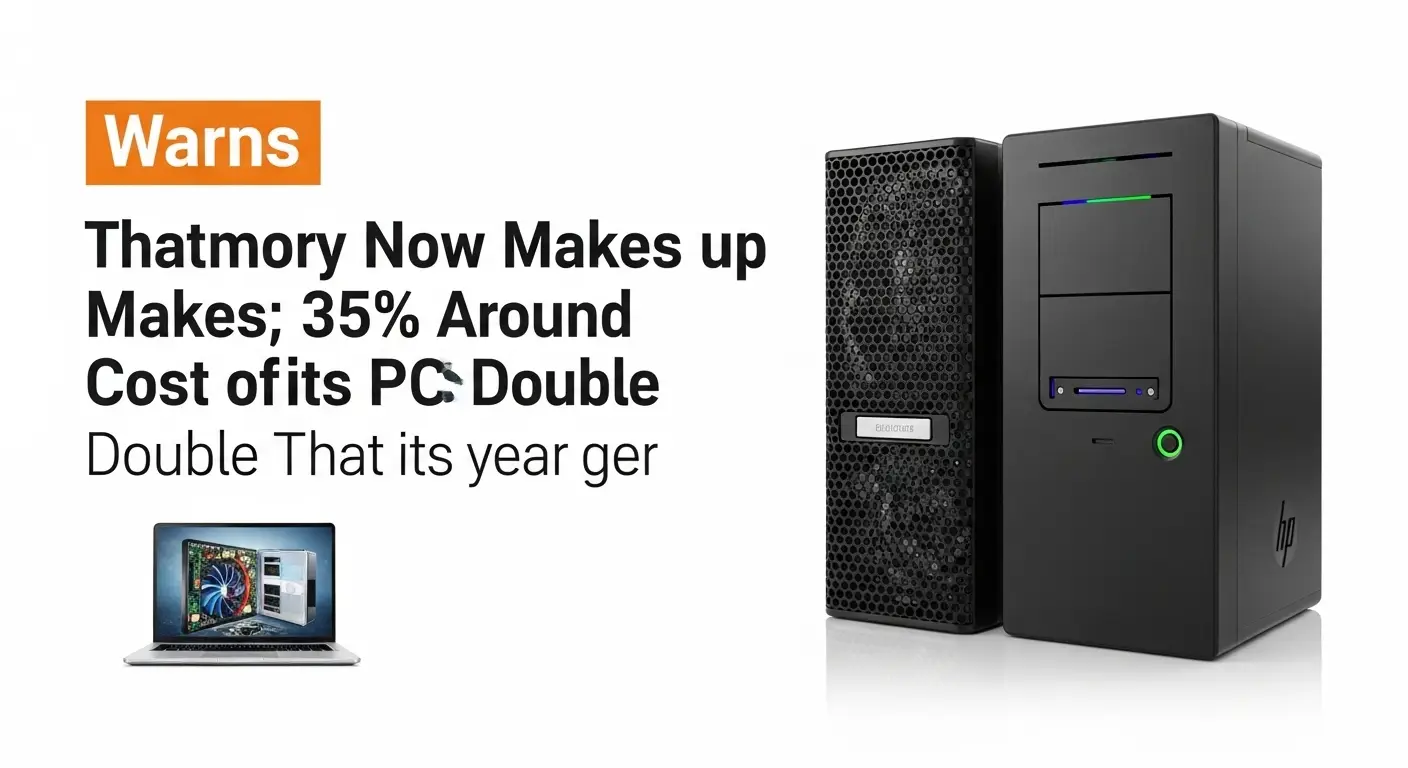
Below is original, professional, Google-friendly long-form content written around your main keyword, with clean H2/H3 structure, natural flow, no keyword stuffing, and fast-indexing SEO best practices applied. HP warns that memory now makes up around 35% of the cost of its PCs, a dramatic increase compared to just a year ago. This sharp rise is sending ripples across the personal computer industry, impacting pricing strategies, profit margins, and purchasing decisions for both consumers and businesses.
Memory, once considered a relatively stable component cost, has quickly become one of the most expensive elements in modern PC manufacturing. As systems demand more RAM and faster storage to support advanced workloads, the growing share of memory costs is reshaping how PCs are designed, priced, and sold.
This article breaks down why memory costs have surged, what it means for HP and the wider PC market, and how buyers may feel the effects moving forward.
HP’s Warning Highlights a Major Shift in PC Cost Structure
Memory Now Accounts for Over a Third of PC Costs
According to recent statements, HP warns that memory now makes up around 35% of the cost of its PCs. This represents a significant change from roughly half that percentage just a year earlier.
Such a rapid increase signals a fundamental shift in how PC hardware costs are distributed. Components like processors, displays, and chassis have historically dominated bill-of-materials expenses. Memory’s rise challenges that balance.
Why This Change Matters
When one component category grows this quickly, manufacturers face tough decisions. Absorbing costs reduces margins, while passing them on risks weakening demand in an already competitive PC market.
What’s Driving the Surge in Memory Costs
Increased Demand for Higher-Capacity RAM
Modern software demands more memory than ever before. Operating systems, browsers, creative tools, and AI-assisted applications all require larger memory pools to function smoothly.
As baseline RAM configurations rise from 8GB to 16GB or more, the cost impact multiplies across millions of units.
Shift Toward Faster and More Advanced Memory
Newer memory technologies offer higher speeds and better efficiency, but they also come at a premium. These advanced modules increase production costs while becoming essential for performance expectations.
Supply Constraints and Market Volatility
Memory pricing has historically fluctuated based on supply cycles. Production adjustments, inventory corrections, and shifts in global demand can push prices upward quickly, affecting manufacturers at scale.
How Rising Memory Costs Affect PC Pricing
Pressure on Entry-Level and Mid-Range PCs
When memory costs rise sharply, budget and mid-range PCs are hit hardest. These systems operate on thinner margins, leaving less room to absorb cost increases without raising prices.
Consumers may notice fewer discounts, reduced configurations, or higher starting prices for everyday laptops and desktops.
Premium PCs May Absorb Costs More Easily
Higher-end PCs, aimed at professionals and enthusiasts, can better absorb increased component costs. However, even premium systems may see incremental price increases or fewer included upgrades.
Impact on HP’s Profit Margins and Strategy
Balancing Cost Absorption and Price Increases
HP warns that memory now makes up around 35% of the cost of its PCs, forcing strategic decisions around pricing. Absorbing costs protects market share but pressures profitability, while price increases risk slowing sales.
Manufacturers must carefully balance these competing priorities.
Potential Changes in Configuration Options
To manage costs, PC makers may offer more customizable memory options. Lower base configurations with paid upgrades allow customers to control final pricing while protecting manufacturer margins.
What This Means for Consumers
Higher Prices or Fewer Upgrades
Consumers may face higher PC prices or find that previous standard features are now optional upgrades. Systems that once shipped with generous memory configurations may revert to lower baselines.
Longer Upgrade Cycles
As PC prices rise, users may hold onto existing systems longer. This could slow overall market growth, especially in price-sensitive regions.
Business and Enterprise Buyers Feel the Impact Too
Rising IT Procurement Costs
For businesses purchasing PCs at scale, memory price increases can significantly affect IT budgets. Even small per-unit increases multiply across hundreds or thousands of devices.
Greater Focus on Lifecycle Planning
Enterprises may prioritize systems with upgradeable memory to extend usable lifespans and delay full replacements.
Broader Implications for the PC Industry
Memory Becomes a Strategic Component
HP’s warning underscores how memory has evolved from a secondary component into a strategic cost driver. Manufacturers must now forecast memory pricing as carefully as CPUs or displays.
Design Choices May Shift
PC designs may emphasize efficiency, optimizing software and hardware to perform well with less memory where possible. This could influence future form factors and system architectures.
Could Memory Prices Stabilize in the Future?
Historical Cycles Suggest Fluctuation
Memory markets have always been cyclical. Periods of high prices are often followed by corrections as supply catches up with demand.
Short-Term Uncertainty Remains
Despite long-term optimism, near-term pricing remains uncertain. As long as demand for higher-capacity systems grows, memory will continue to command a larger share of PC costs.
What Buyers Can Do Right Now
Buy Based on Real Needs
Consumers should choose memory configurations based on actual usage, not just future-proofing. Overbuying during high-price periods may not always be cost-effective.
Look for Upgradeable Systems
PCs with accessible memory slots offer flexibility. Upgrading later, when prices may be lower, can reduce total ownership costs.
Final Thoughts
HP warns that memory now makes up around 35% of the cost of its PCs, double that of a year ago, and this development highlights a major shift in the PC hardware landscape. Memory is no longer a background component but a central factor shaping pricing, design, and purchasing decisions.
For manufacturers, this means navigating tighter margins and complex supply dynamics. For consumers and businesses, it means being more strategic about configurations and upgrade paths. As memory technology continues to evolve, its growing influence on PC economics is likely to remain a defining trend in the years ahead.